
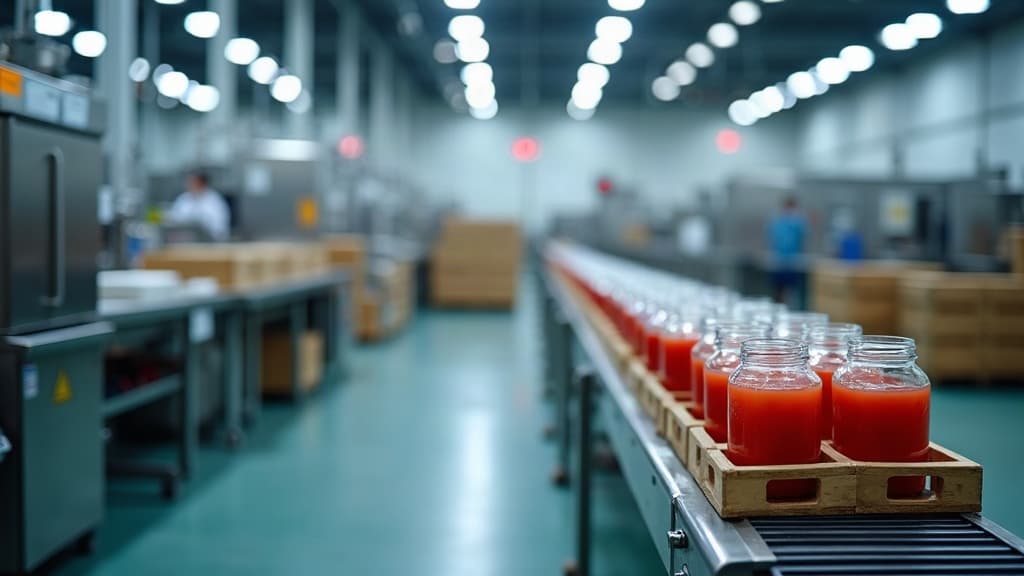
How to perform capacity planning in a fruit juice production line?
Capacity planning is critical for the efficiency and sustainability of a juice production line. Correct capacity determination optimizes investment costs and enhances the effectiveness of production processes. Incorrect capacity planning can lead to production losses, high costs, and an inability to meet market demands.
Definition
Capacity planning is the process of determining how much product a production line can produce. This process encompasses all stages from raw material input to final product output. Capacity is typically expressed in units such as tons/day or tons/hour and depends on the design of the production line, equipment capacity, and labor efficiency.
Where It Is Used
Juice production lines are used for producing juice from various types of fruits (orange, apple, pomegranate, etc.). These lines are typically applied in the following areas:
- Fresh juice production
- Concentrated juice production
- Packaged juice production
Engineering Assessment
Important engineering factors to consider during capacity planning include:
- Production Flow: Analyzing the flow at each stage of the production process helps identify bottlenecks on the line. For instance, each stage such as fruit washing, squeezing, filtration, and filling can impact the overall capacity.
- Energy Consumption: Energy efficiency directly affects production costs. Energy consumption varies according to the type of equipment and operating conditions.
- CIP (Cleaning In-Place) Systems: The hygienic design of the production line enhances the effectiveness of CIP systems. This ensures production continuity while reducing cleaning time.
- Yield: Production efficiency is the amount of final product obtained relative to raw material input. Process optimization is required to minimize yield losses.
| Criterion | Description |
|---|---|
| Production Flow | Analysis of each stage on the line |
| Energy Consumption | Energy efficiency of the equipment |
| CIP Systems | Cleaning time and effectiveness |
| Yield | Amount of final product |
Choosing the Right Equipment
Equipment used in the juice production line should be selected based on production goals and product type. For example:
- Juicing Machines: High-efficiency juicing machines should be preferred for orange juice.
- Filtration Systems: Appropriate filtration systems should be selected for concentrated production.
- Filling Machines: Suitable filling machines are required for different packaging formats. Filling & Packaging Line provides detailed information on this topic.
Common Mistakes
Common mistakes in capacity planning can negatively affect production processes:
- Inadequate Raw Material Analysis: Incorrect assessment of raw material quality and quantity can lead to production losses.
- Incorrect Determination of Equipment Capacity: Failing to accurately determine equipment capacity can cause bottlenecks in the production process.
- Misestimation of Market Demand: Incorrect evaluation of market demands can result in overproduction or underproduction.
ProcessTürk Approach
At ProcessTürk, we meticulously handle engineering, production, installation, and commissioning processes in juice production line projects. At the project outset, we provide customized solutions by identifying your needs. We offer technical support at every stage, from equipment selection to production flow. Throughout this process, we thoroughly assess all phases of your project.
Conclusion
Correct capacity planning in the juice production line is a critical step to increase efficiency and reduce costs. This process should be supported by careful engineering assessments and appropriate equipment selections.
Frequently Asked Questions
Why is capacity planning important?
Capacity planning enhances the effectiveness of production processes and optimizes costs. Incorrect planning can lead to production losses and issues in meeting market demands.
What equipment is used in juice production?
Equipment such as juicing machines, filtration systems, and filling machines are used in juice production. Equipment selection should be based on production goals and product type.
How can energy consumption be reduced?
Energy consumption can be reduced by using high energy-efficient equipment and optimizing the production flow. This lowers costs and reduces environmental impacts.
What are the advantages of CIP systems?
CIP systems ensure that the production line operates under hygienic conditions. These systems shorten cleaning time, thereby increasing production continuity.
How are project costs determined?
Project costs vary based on factors such as equipment selection, production capacity, and labor. A special assessment is required for each project.
Next Step
If you want to make the correct capacity planning for your juice production line, you can contact ProcessTürk to request an engineering assessment.