ProcessTürk — Turnkey Industrial Plant Solutions

Solar Energy Drying Line

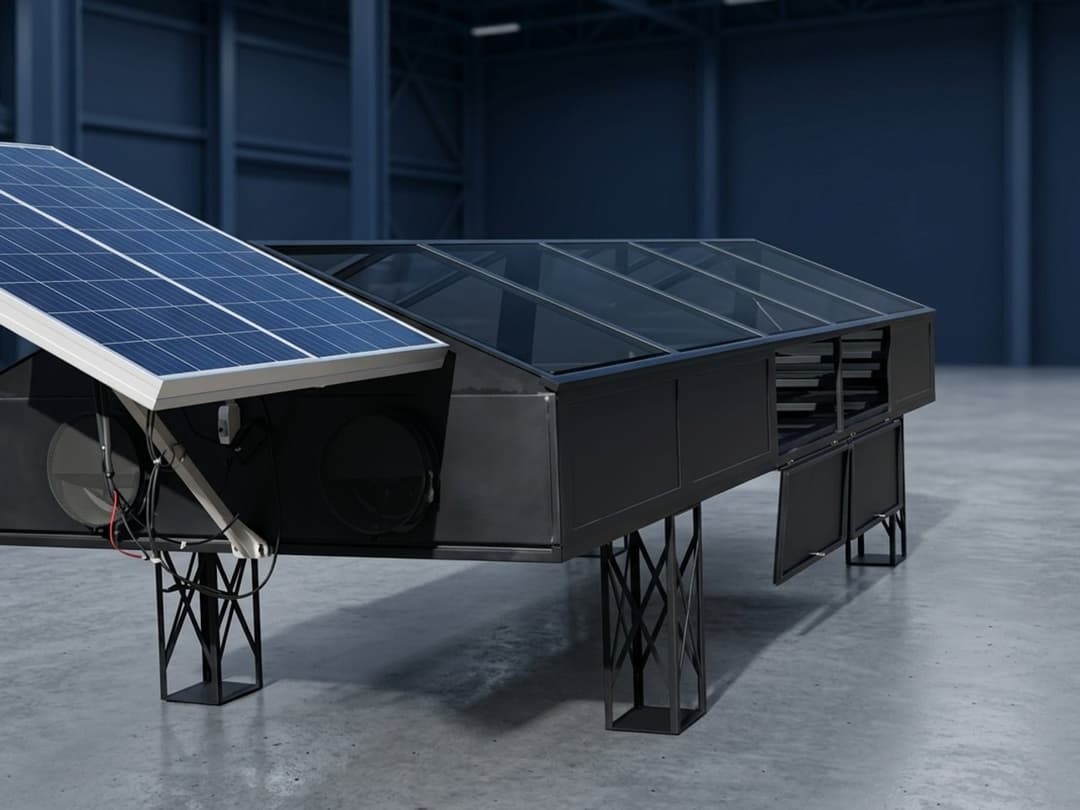
Drying is one of the steps in food processing with the highest continuous energy costs: a dryer powered by natural gas or solid fuel consumes fuel every shift, regardless of installation costs. This line eliminates that cost at the source — the heat and electricity required for drying are produced from solar collectors. Unlike open solar drying, the product dries in a closed chamber: it is protected from dust, dirt, flies, and possible rain, and it retains its natural color better as it does not see direct sunlight. The system automatically starts when the sun rises and stops when it sets. For businesses that want to continue operating during periods of insufficient sunlight, a 220 V electric resistance hybrid option is available.

Last updated:

Capacity
20 – 120 kg fresh product / filling
Lead time
3 – 6 weeks
Approx. project-based investment
On request
Exact price confirmed in quote

Prices may vary by capacity, automation level, equipment brand, auxiliary utilities, destination country and project scope. The exact price is confirmed by a quote prepared after the engineering pre-assessment.

Who is it for?

Who is it for?

Producers who want to turn their garden/field products into value-added dried food
Dried fruit and vegetable exporters
Aromatic/medicinal plant processors
Small and medium-sized food businesses that cannot scale drying due to energy costs
Production Flow

Production Flow

A drying solution that dries fruits, vegetables, and aromatic plants using solar energy, requiring no operational energy. Available only in sunny and solar + electric hybrid options.

1 Preparation and slicing 2 Placement on trays 3 Solar drying 4 Automatic stop 5 Discharge 5 ADIM

Click a number on the diagram to highlight the matching step.

01
Preparation and slicing
The product is washed and sliced. The thickness of the slices directly determines the drying time; as the thickness increases, the time extends.
02
Placement on trays
Sliced product is laid out in a single layer on Teflon-coated aluminum trays.
03
Solar drying
Air heated in collectors is delivered to the cabinet by a fan and removes moisture from the product. The temperature ranges from 40 – 70 °C depending on the sun.
04
Automatic stop
When the sun sets, the system stops automatically; in hybrid mode, it can continue to operate with electric resistance.
05
Discharge
The dried product is removed from the trays; it is ready for the packaging step.
Facility Requirements

Facility Requirements

Installation area
Open area without shading throughout the day
Electricity
Not required for the sunny option · 220 V / 1.5 kW in hybrid option
Water / steam
Not required for the drying step
Personnel
Seasonal labor for loading and unloading
Machines in this line

Machines that build this line

Solar Energy Drying System
Drying & Dehydration
Fully automatic

Solar Energy Drying System

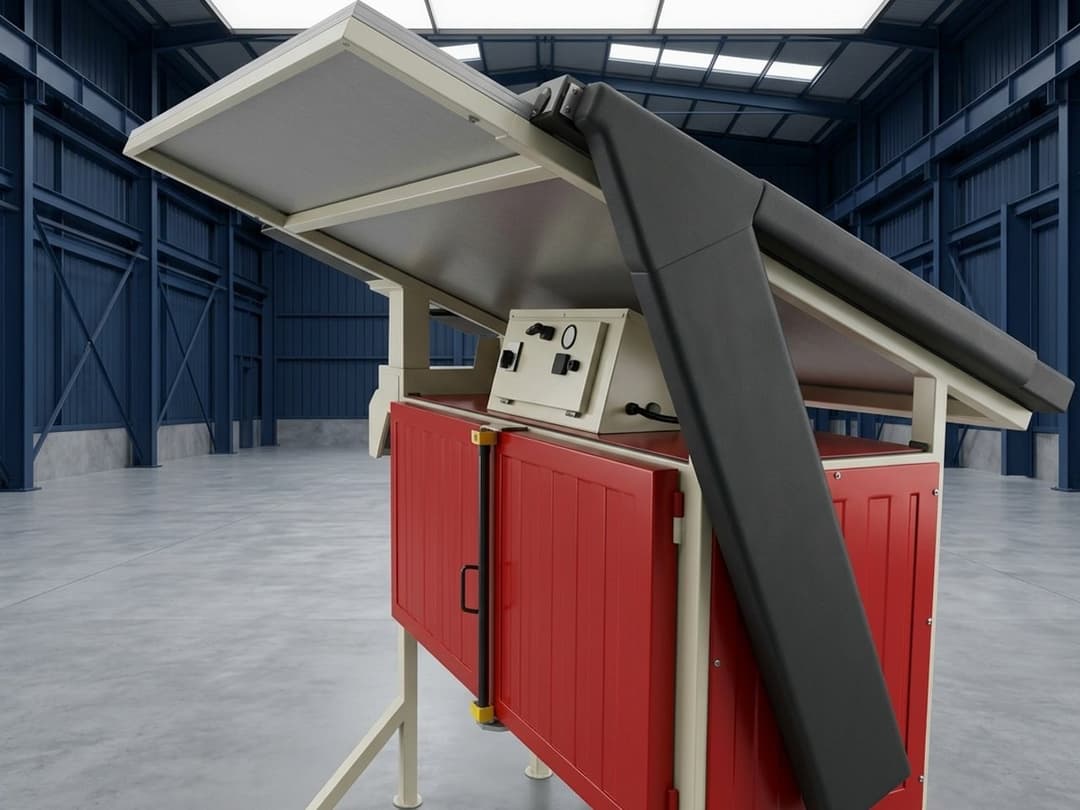
A closed cabin fruit, vegetable, and aromatic plant drying system that operates solely on solar energy. It generates its own electricity and heat using solar collectors.
Capacity
18 – 30 trays (depending on variant)
Lead time
6 weeks
Estimated investment
⁦⁦$5,280⁩ – ⁦$8,040⁩⁩
3 capacity options
View Details
Solar + Electric Hybrid Drying Oven
Drying & Dehydration
Fully automatic

Solar + Electric Hybrid Drying Oven

A compact drying oven powered by solar energy and a 220 V electric resistance. Both energy sources can be used separately or together.

Capacity
24 trays · 5.76 m² drying area
Lead time
3 weeks
Estimated investment
Project-based price
View Details
Core Systems This Line Can Include

Core Systems This Line Can Include

  • Closed drying chamber
  • Solar collector and photovoltaic panel group
  • Fan and hot air circulation system
  • Aluminum Teflon-coated tray set
  • Control panel
  • 1.5 kW / 220 V electric resistance in hybrid option
Optional Equipment

Optional Equipment

Pre-washing unit — designed on demand Slicing/chopping unit — designed upon request Post-drying weighing and packaging — designed upon request Wheeled chassis for portability

Investment Rationale

The main cost of the dryer is not the purchase price, but the fuel consumed in each shift. Solar drying eliminates this continuous expense while the closed chamber also removes hygiene and color loss associated with open-air drying — the return on investment comes from the energy savings accumulated with each batch dried.

Installation & Commissioning

Layout, mechanical/electrical assembly coordination and full-capacity commissioning are handled by our team.

Operator Training

During commissioning your operators are trained on-site for operation, cleaning and daily maintenance.

Spare Parts & Service

A critical spare-parts list is provided with the quote; remote and on-site service support production continuity.

Customization for Your Product

Configuration is adapted by our engineers to your product characteristics, packaging, capacity and plant conditions.

What will we ask you before the quote?

These details let us offer the right scope and the right price the first time.

Product type
Capacity target
Packaging type
Installation country
Existing facility status
Power / water / air utilities
Target budget
Planned investment date
Frequently Asked Questions

Frequently Asked Questions

Does it work in cloudy weather or winter?

The sunny option is dependent on sunlight, and efficiency varies according to the sun's condition. If continuous operation is required, the hybrid option with 220 V electric resistance should be preferred; both energy sources can be used separately or together.

How long does drying take?

The duration varies according to the product and slice thickness. As the slice thickness increases, the drying time proportionally extends. The exact duration is provided during the project phase when the product to be dried and the target moisture content are specified.

Is the color and aroma of the product preserved?

The product dries in a closed chamber, without direct sunlight. Therefore, the natural color, smell, and aroma are better preserved compared to open-air sun drying.

Which products can be dried?

Fruits and vegetables, aromatic herbs, grains, and processed foods like tarhana/paste can be dried.

Is there after-sales support?

Yes; we support your production continuity with spare-parts supply, technical support and remote/on-site service. During commissioning your operators are trained on-site for operation, cleaning and daily maintenance, and this training usually covers your entire production team. If a fault occurs, the issue is first diagnosed through remote technical support; if it cannot be resolved remotely, an on-site intervention is planned. A separate list of critical spare parts is provided together with the quotation, so you can see in advance which parts should be kept in stock. A periodic maintenance schedule and checklist are shared together with delivery. This support process applies to the same standard regardless of the country where the line is installed; differences in language or time zone do not change the quality of support. As a result, your line is supported with the same goal of uninterrupted production for years after installation.

Does the installation country affect the price?

Yes; shipping, customs, local assembly and utility costs vary by destination country and these items are confirmed in the quotation. The choice between sea and land transport is determined by distance and time constraints, and the cost of each is calculated separately. Customs duties and import procedures differ from country to country, which is why destination information is requested at the quotation stage. Local electrical voltage and grid frequency may also require adaptation of the machine, and this is stated as a separate line item in the quotation. Travel and accommodation costs for the installation team are either included in the quotation or shown as a separate item, depending on the scope of the project. This transparency lets you see the total investment cost of your project clearly in advance.

How does the warranty work for line projects?

For complete line projects, the warranty is defined per piece of equipment and stated in writing in the quotation, since each machine that makes up the line may carry a different warranty period. The warranty period generally starts from the delivery date, not from commissioning, and this distinction is clearly stated in the proposal document. If a fault occurs within warranty, it is first diagnosed through remote technical support; if the issue cannot be resolved remotely, an on-site intervention is planned and our team steps in on location. Critical wear parts are outside the warranty scope; a separate spare-parts list and stock recommendation for these items is provided together with the quotation. The warranty covers manufacturing defects, assembly errors and electrical/mechanical component faults, while damage caused by user error falls outside this scope. This structure gives even a multi-machine line investment a predictable and transparent support process.

Get an engineering pre-assessment for this line

Share your capacity target; our engineers will get back with area, equipment and estimated investment.

Chat on WhatsApp