
Robotics and Automation Solutions
From palletizing robots to PLC/SCADA-based process control — raise the automation level of your production line.
Equipment in the catalog
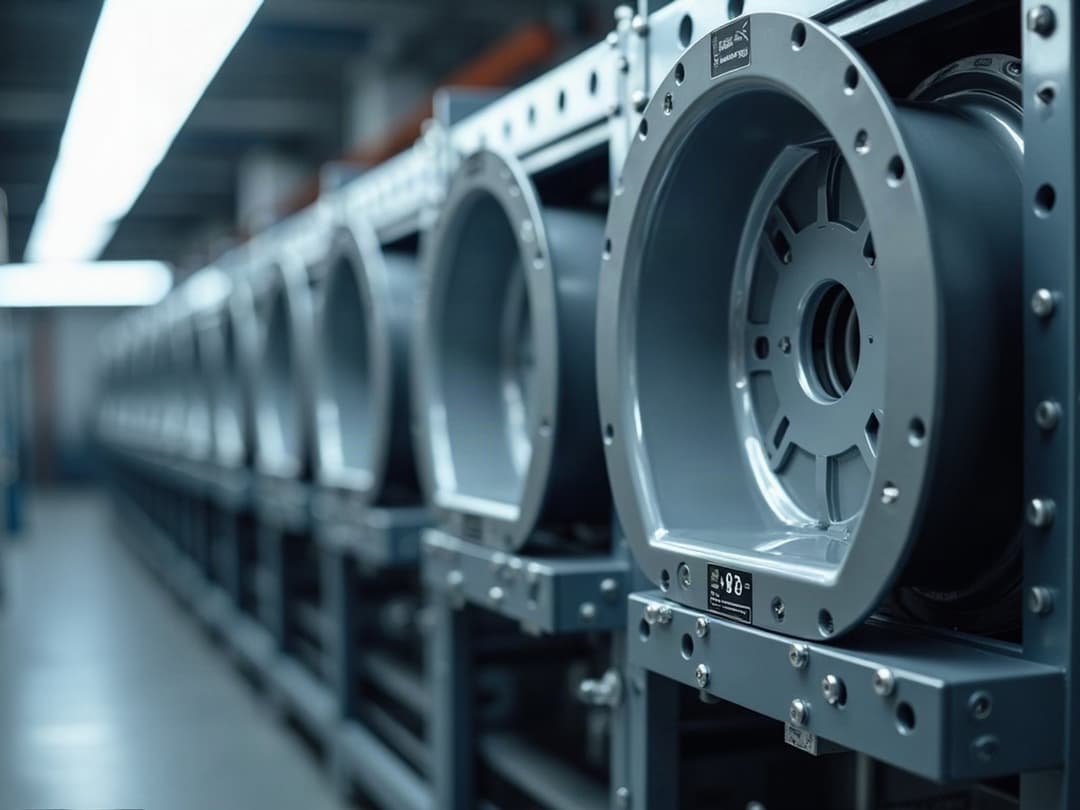
Electrophoresis Robot
A robotic solution providing automatic transport and process management in electrophoresis operations.
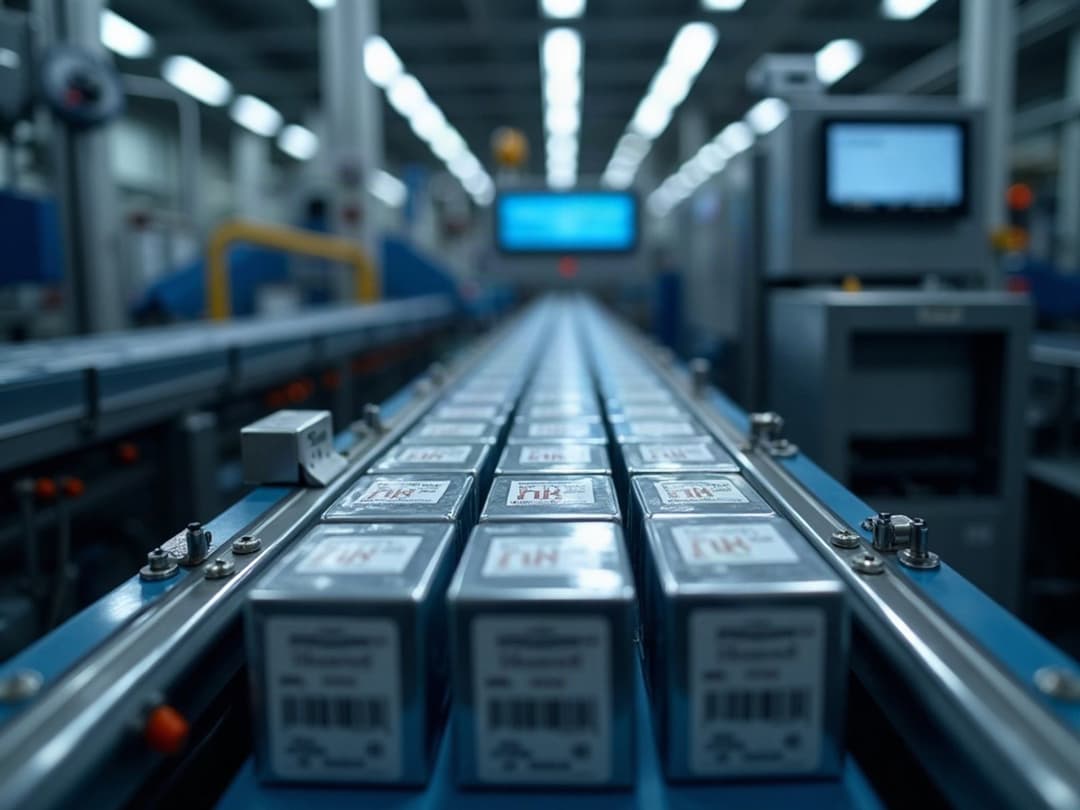
Automatic Feeding Robot
A robot system that automatically feeds products and parts to the production line.
What would you like to do?
Other stations are assessed through project-based engineering. Each catalog item states its own application.
How does a robotic integration proceed?
When does robotic automation make sense?
Robotic automation is a sound investment when a task is repetitive and heavy, runs across more than one shift, requires hand contact with open product, or needs identical precision on every product. A robot is not the right answer for every line; the decision is made station by station. The four criteria below are the screening questions asked when assessing a station. If none of them applies, a simpler mechanical solution is often the better investment.
Should repetitive heavy handling be automated?
Repetitive heavy handling is the first candidate for robotic automation, because lifting crates, sacks or cartons all day wears operators out and carries an injury risk. ISO 11228-1, the ergonomics standard for manual lifting, lowering and carrying, sets recommended limits that take into account the intensity, frequency and duration of the task. When a station's assessment under this standard shows a high risk, an end-of-line palletizing robot is one of the first options to evaluate.
How does shift count affect the robot decision?
Shift count is a decision criterion, because a robot runs the same station in the same way on every shift, while staffing a heavy station consistently across two or three shifts is often difficult. For example, a line running three 8-hour shifts needs the station staffed 24 hours a day. A robot cell reduces this load to supervision, changeover and cleaning tasks, and staff can be moved to more skilled work.
Does a robot reduce product contact and contamination risk?
Robotic transfer reduces contamination risk where open product is handled by hand, because every hand contact is a potential source of contamination. In such stations, the robot's gripper and housing must themselves be hygienic. EHEDG hygienic design principles and an ingress protection rating suited to washdown, such as IP69 defined in IEC 60529, are written into the cell's technical specification.
When is a robot needed for speed and consistency?
Consistency is a decision criterion when stacking patterns, palletizing layouts or placement accuracy must be identical for every product. A robot repeats the programmed path in every cycle, so the pallet pattern stays stable in transport and the line's rhythm stays steady. Hourly output, however, depends on the product, gripper and pattern, which is why it is set per project rather than taken from a catalogue.
Which safety standards apply to a robot cell?
Robot-cell safety is based on international standards that treat the robot itself and its application in the line separately. ISO 10218-1:2025 covers the robot and ISO 10218-2:2025 covers the cell and its integration; in the European Union, Machinery Regulation (EU) 2023/1230 replaces Machinery Directive 2006/42/EC from 20 January 2027. The main references are:
ISO 10218-1:2025 — Part 1: industrial robots
Defines the requirements for the safe design and construction of the robot itself.
Official source ↗ISO 10218-2:2025 — Part 2: robot applications and cells
Covers the integration of the robot into the line, the cell layout and the safety of the application; it is the integrator's area of responsibility.
Official source ↗Machinery Regulation (EU) 2023/1230
The legal framework for machinery safety in the European Union; it applies from 20 January 2027 and replaces Machinery Directive 2006/42/EC.
Official source ↗How is the risk assessment for a robot cell done?
A risk assessment is a systematic analysis that identifies the hazards in a robot cell and selects a safeguard for each, carried out separately for every cell under the ISO 12100 machinery-safety principles. Protective fencing, light curtains, door interlocks and the emergency-stop circuit are derived from that assessment, and the assessment record becomes part of the technical file.
What does hygienic design mean for food contact?
Hygienic design for food contact is the selection of grippers and product-contact surfaces in cleanable materials and geometries that do not trap dirt. EHEDG hygienic design principles are the main reference for this selection; in cells that are washed down, a protection rating resistant to high-pressure, high-temperature water jets, such as IP69 under IEC 60529, is taken into account.
The applicable set of standards is determined by the project and the target market; this list is not a declaration of conformity.