
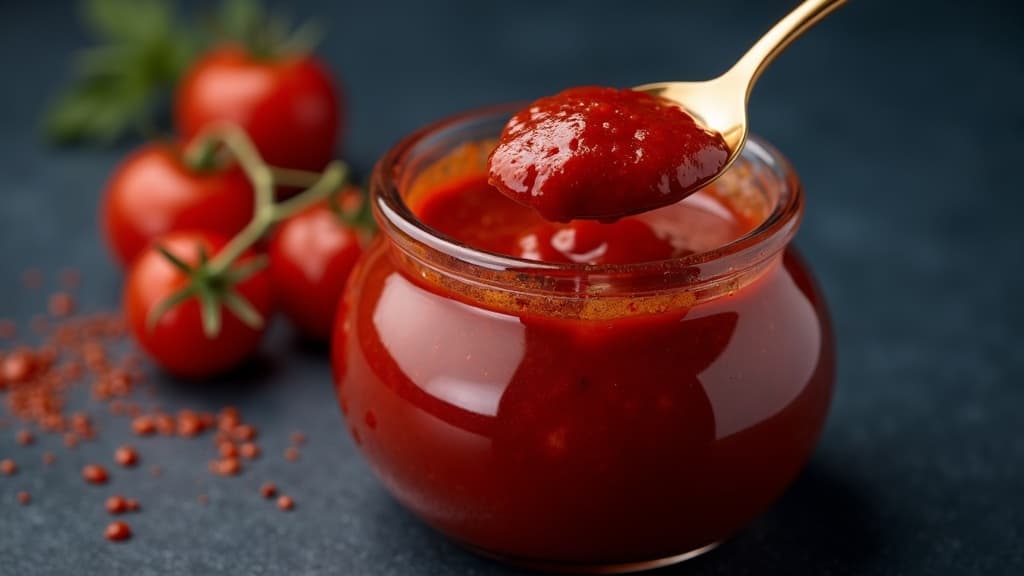
Tomato Paste Processing Line — 30–50 tons/day
Study at a Glance
- Sector
- Food — fruit and vegetable processing
- Capacity
- 30 – 50 tons/day
- Investment Range
- 380,000 – 415,000 EUR
- Estimated Setup Time
- 13 – 18 weeks
- Study Year
- 2021
From raw tomatoes to concentrated paste: a complete ten-stage processing line from acceptance and washing to enzymatic inactivation, vacuum concentration, pasteurization, filling, and cooling.
Investment Rationale
In every region where tomatoes are produced, surplus harvest is sold off at low prices. The facility that processes it into paste protects itself from price fluctuations by converting the same raw material into a product with a long shelf life and portability.
Scope of Work
- Unloading ramp and acceptance line
- Pipe washing conveyor
- Raw material shredding unit
- Enzymatic inactivation unit
- Turbo extractor - shell and core separation
- Pulp tank
- Vacuum concentration system
- Pasteurizer unit
- Filling unit
- Cooling tunnel
Key Findings
Pricing capacity; stages are sized according to this flow rate.
Single flow from acceptance to cooling; does not require intermediate storage.
Low temperature concentration - a decisive preference that preserves red color and aroma.
Can be configured with box, jar, or aseptic bag options.
Investment Budget
Approximate investment ranges by equipment group. These are grouped estimate bands, not line-item prices.
There is no item breakdown in the source study; the total amount has been converted into a band.
Excluded from this budget
- Transportation and transportation insurance
- Building, infrastructure, steam and electricity line
- Customs clearance and local taxes
- Travel and accommodation expenses of the assembly team
The price is EXW and is based on a study from 2021; the current value varies according to specifications, capacity, and exchange rate conditions.
What the line does
It transforms raw tomatoes coming from the field into high shelf-life concentrated paste. The line consists of ten stages and operates in a single flow from the acceptance ramp to the cooling tunnel.
Critical stage: enzymatic inactivation
As soon as the tomatoes are crushed, the pectin-degrading enzymes inside activate and decrease the product's viscosity. Therefore, the rapid heating stage after crushing is the point that determines the quality of the line: the faster the temperature rises, the higher the viscosity of the paste (and thus its commercial value).
Why vacuum concentration
Removing water at atmospheric pressure burns the product, darkens the color, and spoils the aroma. Because the boiling point is lowered under vacuum, concentration occurs at a lower temperature; the red color and fresh aroma are preserved. The Brix value is adjusted in this stage.
Filling and shelf life
Hot filling is done after pasteurization; options for cans, jars, or aseptic bags can be configured. The cooling tunnel reduces the product to storage temperature.
The scope of this study
This page is about the equipment scope and investment band work. Raw material supply, season planning, operating expenses, and market analysis are not included.
Assumptions & Limitations
This study was prepared under the assumptions below. Results will differ under other conditions.
- Capacity uncertainty
- The source study mentioned three different capacity expressions; this page is based on the PRICED capacity (30–50 tons/day). The line will be resized for different capacity.
- Seasonal operation
- Tomato processing is seasonal; capacity calculation should be based on the total raw material to be processed over the season, not daily.
- Price floor
- The investment band is based on a 2021 study.
- Out of scope
- Building, boiler, wastewater treatment, raw material, and operating costs are not within the scope of this study.
- Status
- This is an equipment feasibility study; the described facility has not been established.
Technical Specifications
| Capacity | 30 – 50 tons/day (raw tomatoes) |
|---|---|
| Number of stages | 10 |
| Concentration | Vacuum, low temperature |
| Filling | Hot filling - box / jar / aseptic |
| Material | Surfaces in contact with the product are stainless steel |
Download the Full Report (PDF)
Leave your e-mail and download the report instantly.
Download the Full Report (PDF) (opens in a new tab)Frequently Asked Questions
Is it reasonable to invest in a seasonal operation?
Tomato processing is seasonal; the ability to adapt the line to other products such as peppers and apricots with the same infrastructure extends the annual usage period of the investment. The scope can be expanded in this direction.
Can aseptic filling be done?
Yes. The filling unit can be configured for boxes, jars, or aseptic bags; the choice is made according to the target market and logistics.
Is the price current?
No. The price is based on a study from 2021; a current amount will be provided based on capacity and specifications when requested.