
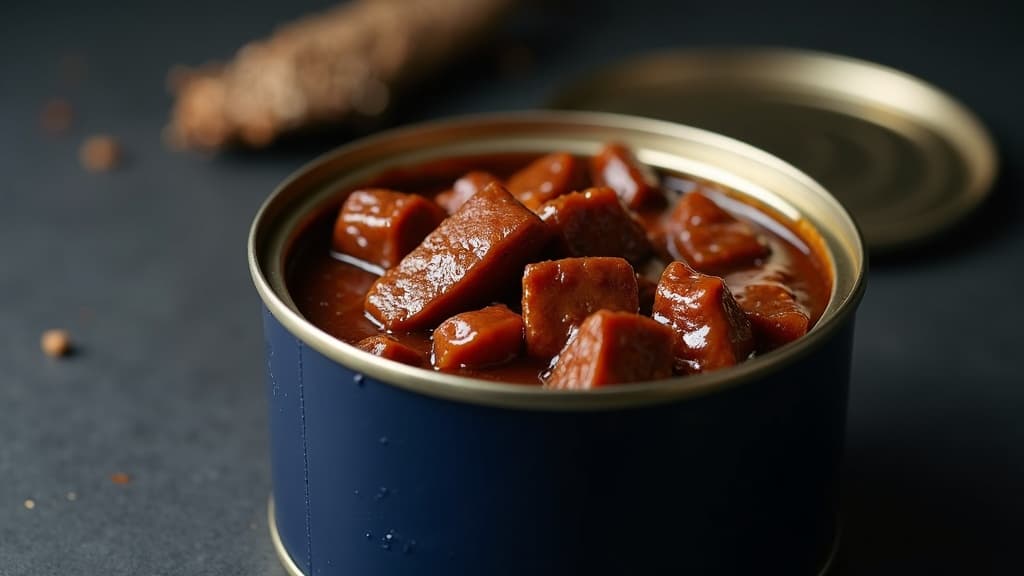
Meat Processing and Meat Preservation Facility — From Slaughter to Sterilization
Study at a Glance
- Sector
- Food — meat processing and canning
- Country
- Caucasus
- Capacity
- 2 cattle/day slaughter · 100 boxes/hour sterilization
- Investment Range
- 91,000 – 107,000 USD
- Estimated Setup Time
- 12 – 16 weeks
- Study Year
- 2023
A facility that brings together the entire chain from live animals to long shelf-life canned products: slaughterhouse, meat preparation, filling platform, 400-liter cooking kettle, and sterilization autoclave with a capacity of 100 cans per hour.
Investment Rationale
The shortest chain that converts live animals into a food product with a long shelf life that does not require a cold chain. Since slaughtering and canning are in the same facility, the cold chain risk and intermediate transport costs are eliminated; it is possible to start with a small slaughtering capacity and grow the canning stage.
Scope of Work
- Slaughterhouse unit — 2 cattle/day (overhead crane, platform, blood-water channel, bone saw, knife set)
- Meat preparation station (stainless steel tables, polyethylene cutting board, transport box)
- Filling platform (double-walled tank, meat juice separation sieve, can sterilization conveyor, closing unit)
- Horizontal cooking kettle 400 L — with mixer, double-walled, with auger discharge
- Sterilization autoclave — 8 basket, 100 boxes/hour, PLC controlled
- Steam boiler (electric or natural gas)
- Piston air compressor
- Cooling tower
- Electrical panel, line automation, transfer pumps and piping
- Sausage production equipment (optional)
- Field assembly and commissioning
Key Findings
Cutting, preparation, and canning in the same facility; processed before the carcass goes to the cold chain.
Autoclave sterilization capacity — this stage determines the output speed of the facility.
Sterilized canned goods are significantly more durable against risks of power outages and cooling infrastructure than fresh meat.
Cooking kettle volume; can be adapted to local fuel infrastructure as it can be heated with steam or natural gas.
The cooling tower recovers sterilization water; reduces operating costs in areas with limited water infrastructure.
Sausage equipment can be optionally added to produce a second product group from the same facility.
Investment Budget
Approximate investment ranges by equipment group. These are grouped estimate bands, not line-item prices.
For information — not included in the total
The source work is an optional item; it is not included in the total investment.
Excluded from this budget
- Transportation and transportation insurance
- Customs clearance and local taxes
- Building, infrastructure, and building electrical line
- Travel, accommodation, and meal expenses of the assembly/commissioning team
The belt is based on the work dated 2023 and is EXW; the current price varies according to the specification, exchange rate, and delivery conditions. The power supply to the electrical panel is the responsibility of the buyer, while the connection from the panel to the machines is the responsibility of the seller.
The Subject of the Study
A meat processing plant that will be established in the Caucasus region, completing all steps from slaughter to canning within itself, has been studied. The facility starts small-scale with a capacity of 2 large cattle slaughter per day; the canning stage is sized to sterilize 100 cans per hour.
Why Integrated Setup
Meat is a product that loses value within a few hours when the cold chain is broken. Performing slaughter and processing in separate facilities creates both cold chain risks and transportation costs. In this study, the slaughterhouse, preparation, and canning stages are designed under the same roof; the carcass enters the canning line without ever breaking the cold chain.
The choice of canning comes from this: sterilized canned goods can be stored for months without requiring a cold chain. In markets where cooling infrastructure is expensive and prone to power outages, it provides a significant durability advantage compared to fresh meat sales.
Process Flow
In the slaughterhouse, the carcass is suspended by an overhead crane, and the blood and water channel keeps the floor dry, it is divided with a bone cutting saw. At the meat preparation station, it is cut into pieces suitable for canning.
On the filling platform, a double-walled tank and a sieving system separate meat from meat juice; the cans pass through a sterilizing conveyor, are filled, and sealed. The 400-liter horizontal cooking kettle is mixed and double-walled — the auger discharges the product to a transport auger.
The final stage is an autoclave with eight baskets. This PLC-controlled, pneumatic lid unit brings the product to commercial sterility; the plate heat exchanger recovers heat.
Auxiliary Equipment
The steam boiler feeds both the cooking kettle and the autoclave and can be set up with electricity or natural gas. The cooling tower reduces water consumption by circulating cooling water after sterilization — water infrastructure is a determining detail in limited areas.
The Scope of This Study
This page is a scope of equipment and investment band study. The building, cold room, animal supply, operating expenses, and market analysis are outside the scope.
Assumptions & Limitations
This study was prepared under the assumptions below. Results will differ under other conditions.
- Status
- This is an equipment feasibility study; the described facility has not been established and is not presented as a reference.
- Price base
- The investment band is based on a study dated 2023; the current amount varies according to the exchange rate, specifications, and delivery conditions.
- Out of scope
- Building, cold room, animal supply, operating costs, and market analysis are not included in the scope of this study.
- Delivery
- The amount is factory delivery (EXW); transportation, insurance, and customs are out of scope.
- Periods
- In the resource study, production and delivery times contradict each other; no time commitment has been made on this page, it has been left to be confirmed on a project basis.
Technical Specifications
| Cutting capacity | 2 cattle/day |
|---|---|
| Sterilization | 100 boxes/hour · 8-basket autoclave |
| Cooking kettle | 400 L · double-walled · with mixer |
| Autoclave size | 1,000 × 1,000 × 1,300 mm (h) |
| Autoclave steam consumption | 50 kg/hour |
| Control | PLC · pneumatic lid |
Download the Full Report (PDF)
Leave your e-mail and download the report instantly.
Download the Full Report (PDF) (opens in a new tab)Frequently Asked Questions
Why canned, why not fresh meat?
Sterilized canned goods can be stored for months without requiring a cold chain. In markets where cooling infrastructure is expensive or electricity is intermittent, this fundamentally changes the marketability duration of the product.
Can capacity be increased?
Yes. The slaughterhouse is sized for 2 cattle/day; the autoclave and cooking stage can be rescaled for higher throughput. Capacity increase also changes the layout plan.
Is sausage production included?
No. Sausage equipment is an optional item and is not included in the investment band; it can also be added to the same facility later.
Steam or natural gas?
The cooking kettle and steam boiler can be installed with either option. The local fuel price and infrastructure condition are decisive.
Is the price current?
No. The quote is based on a study from 2023. A current amount will be calculated based on the specifications and delivery conditions when the request is made.