
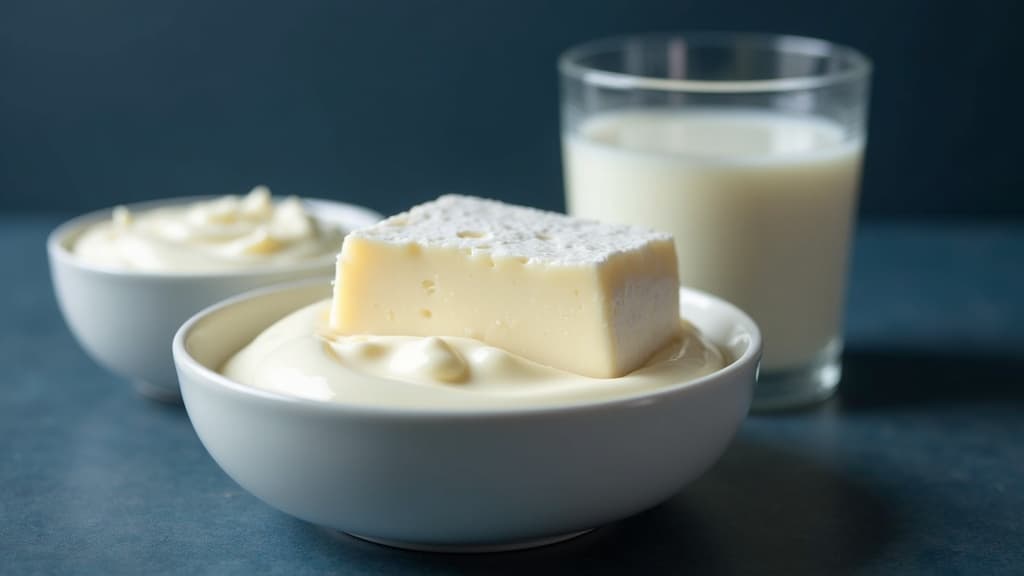
Mini Dairy — 500 L/day Milk, Yogurt, White Cheese and Kashar Cheese
Study at a Glance
- Sector
- Food — milk and dairy products
- Country
- Caucasus
- Capacity
- 500 L/day raw milk acceptance
- Investment Range
- 158,000 – 193,000 USD
- Estimated Setup Time
- 10 – 14 weeks
- Study Year
- 2023
Four products under one roof: pasteurized milk, yogurt, white cheese and cheese. Designed with a daily capacity of 500 liters, it is an integrated facility structured for entry-level dairy farming, open to gradual growth.
Investment Rationale
Milk is a perishable raw material; direct losses occur when demand for a single-product dairy decreases. A four-product setup allows for the redirection of the same raw milk according to demand and balances high unit value products (cheese) with fast cash-generating products (milk, yogurt). The 500-liter scale does not tie up capital until the supply and sales channel is established.
Scope of Work
- Refrigerated raw milk tank 500 L — AISI 304, 60 mm polyurethane insulation
- Pasteurizer and fermenter 500 L — 3-layer, 2 × 10 kW resistance
- Cream separator 500 L/hour — AISI 316 drum, 4,500 rpm
- Homogenizer 500 L/hour — 250 bar, single stage, 3 piston
- Line filter (DN 50, 0.5 mm) and milk centrifugal pump 5,000 L/hour
- Double nozzle semi-automatic volumetric filling machine — 500–5,000 ml, 400–600 units/hour
- Yogurt unit — incubation room heater fan system, collector + 4 milk guns, transport trolley
- White cheese unit — 500 L production tank, 600 L vat, 250 L brine tank (AISI 316)
- Cheddar unit — pressing system, cutting machine, 500 kg/hour stretching machine, cheese molds (optional)
- Vacuum packaging machine and stainless steel work table
- Pipe, valve, fitting; assembly, testing with water, and commissioning (included in cost)
Key Findings
Pasteurized milk, yogurt, white cheese, and cheddar come from the same core equipment; when demand changes, milk can be redirected to another product.
Entry scale; it is also below the standard capacity ladder of our existing milk processing line and caters to the micro dairy segment.
Drinking milk and yogurt generate daily cash; cheese requires aging but has a high unit value and long shelf life.
Homogenizer operating pressure — determines the shelf stability of the product by preventing cream separation.
The brine tank is made of AISI 316, unlike the core equipment; a conscious material choice against the corrosive effect of salt.
Drinking milk + yogurt stage operates independently; cheese and mozzarella units can be added later.
Investment Budget
Approximate investment ranges by equipment group. These are grouped estimate bands, not line-item prices.
For information — not included in the total
Welding work is a separate and optional item; it is not included in the total investment. The press system includes the cutting and stretching machine along with the molds.
Excluded from this budget
- Transport and transport insurance
- Customs clearance and local taxes
- Building, infrastructure, and building electrical line
- Travel, accommodation, and meal expenses of the assembly/commissioning team
The belt is based on the work dated 2023 and is factory delivery. Installation cost is included. The building electrical line belongs to the buyer, while the machine electrical installation belongs to the seller. Cold room and raw milk supply are not included in this scope.
The subject of the study
A mini dairy processing 500 liters of raw milk daily, producing four different product groups in a single facility: pasteurized drinking milk, yogurt, white cheese, and cheese.
Why a multi-product setup
Milk is a raw material that arrives daily and cannot be stored. A dairy reliant on a single product cannot utilize the milk when demand for that product drops and incurs direct losses. A four-product setup mitigates this risk: the same raw milk can be directed to drinking milk, yogurt, or cheese according to demand.
The cash cycle of the products also differs. Drinking milk and yogurt are sold daily and generate quick cash; cheese requires a maturation period but has a high unit value and a long shelf life. Having both balances the pressure on working capital.
Common core, separate branches
All four products use the same core: refrigerated raw milk tank, line filter, cream separator, pasteurizer, and homogenizer. After this point, the products diverge.
The cream separator standardizes the fat content — it determines how much fat goes into each product. The homogenizer prevents cream formation by breaking down fat globules under 250 bar pressure.
In the yogurt branch, the same tank performs both pasteurization and fermentation; the incubation fan raises the room temperature to 42 °C in three hours and maintains it there.
In the cheese branch, fermentation and curd cutting are done in a 500-liter production tank; the wide DN 100 discharge removes the curd without damage. The 600-liter vessel quickly separates whey due to its four-sided filtering design. The brine tank is made of AISI 316 due to the corrosive effect of salt — this is a conscious choice of material different from the core equipment.
The cheese branch is optional in the source study. The stretching machine gives the cheese its fibrous texture by kneading the curd in hot water; it makes volumetric adjustments with dual sensors.
Staged installation
The drinking milk and yogurt stage operates independently and has the fastest cash cycle. The cheese unit can be added after sales stabilize; cheese is already a separate item. This significantly reduces the initial investment.
The limit of this study
This page is a scope of equipment and investment band study. The building, cold room, raw milk supply chain, packaging, and operating expenses are outside the scope.
Assumptions & Limitations
This study was prepared under the assumptions below. Results will differ under other conditions.
- Status
- This is an equipment feasibility study; the described facility has not been established.
- Kaşar scope
- In the source study, the kaşar unit was priced as an optional item, but it was presented as included in the title and equipment list. It has been considered optional on this page and not included in the total investment.
- Capacity definition
- A raw milk input of 500 L/day has been taken as a basis; the product breakdown (how much is milk, how much is cheese) depends on the operational decision.
- Out of scope
- The building, cold room, raw milk supply chain, packaging material, and operating expenses are out of scope.
- Price base
- The investment band is based on a study dated 2023; it varies according to the exchange rate and specifications.
Technical Specifications
| Milk processing capacity | 500 L/day |
|---|---|
| Pasteurizer / fermenter | 500 L · 2 × 10 kW |
| Separator | 500 L/hour · 4,500 rpm · AISI 316 |
| Homogenizer | 500 L/hour · 250 bar · 7.5 kW |
| Cheese vat | 600 L · 3,100 × 1,100 × 410 mm |
| Kaşar stretching | 500 kg/hour · 4.6 kW |
| Filling | 500 – 5,000 ml · 400 – 600 pcs/hour |
Download the Full Report (PDF)
Leave your e-mail and download the report instantly.
Download the Full Report (PDF) (opens in a new tab)Frequently Asked Questions
Is 500 liters not very small?
It is an entry scale and is conscious. A common reason for failure in dairy farming is to make a large investment without filling the capacity. 500 liters does not tie up capital before the raw milk supply chain and sales channel are established; gradual expansion is possible as demand grows.
Is cheese included?
No. The cheese unit is an optional item in the source work and is not included in the investment line; it can be added to the same facility later.
Can only milk and yogurt be produced?
Yes. Drinking milk and yogurt stages operate independently with common core equipment and have the fastest cash cycle. The cheese unit can be added in the second phase.
Is larger capacity possible?
Yes. Our Milk Processing and Pasteurization Line scales up to 20 tons/day; this operation represents the very first step of that ladder.
Is the cold room included?
No. The cold room, building, and raw milk supply chain are not included in this operation.
Is the price current?
No. The line is based on a 2023 study; an updated amount will be provided according to the specifications when you request.