
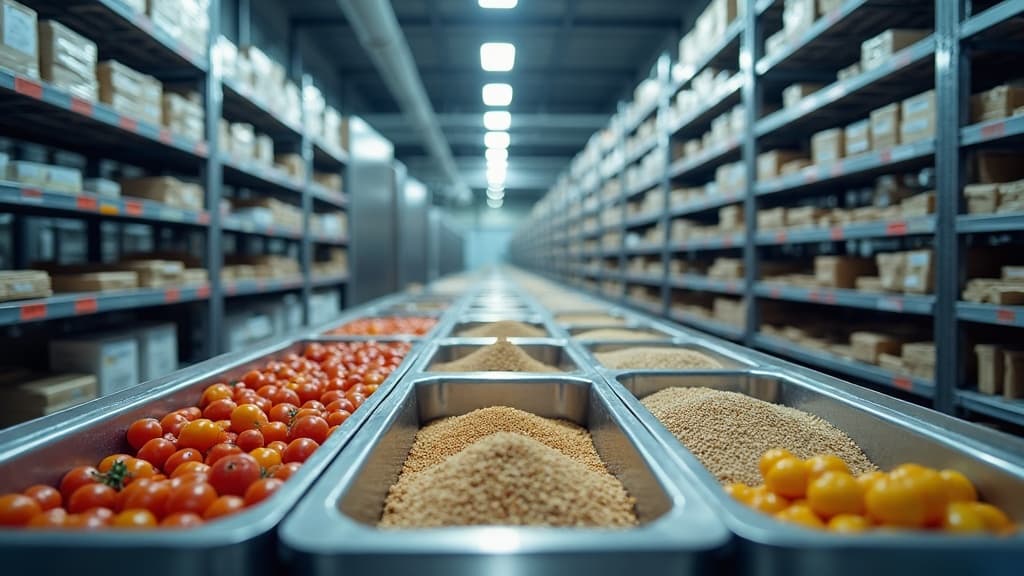
How are food products preserved with cold storage systems?
Cold storage systems play a critical role in enhancing the safety and shelf life of food products. When proper temperature and humidity control are maintained, the risk of spoilage for food items decreases, and their freshness is prolonged. Particularly in food processing facilities, the effective use of these systems improves both product quality and economic efficiency.
Definition
Cold storage systems are facilities or equipment that allow food products to be stored within a specific temperature range. These systems typically operate between 0 °C and 4 °C, preventing the microbial spoilage of food items. Additionally, continuous monitoring of temperature and humidity levels is a crucial factor in maintaining product quality.
Where Are They Used
Cold storage systems are utilized for storing various food products. Below are some application areas and product types:
| Product Type | Application Area |
|---|---|
| Meat and Dairy Products | Cold storage warehouses |
| Fresh Vegetables and Fruits | Cold rooms |
| Seafood | Refrigerated containers |
| Ready-to-Eat Foods | Industrial cold storage |
Engineering Assessment
The effectiveness of cold storage systems relies on several key engineering criteria:
- Surface Area: The cold storage area must be accurately calculated based on product volume. For example, a 1000 m³ cold storage warehouse can store approximately 20 tons/day of products.
- Energy Consumption: The energy efficiency of refrigeration systems directly affects operating costs. Energy consumption depends on the size of the system and the refrigeration technology used.
- Cleaning and Maintenance: CIP (Cleaning In Place) systems are essential for keeping cold storage areas hygienic. Their effectiveness enhances product quality.
- Level of Automation: Automatic monitoring and control systems ensure continuous monitoring of temperature and humidity levels, thus increasing food safety.
Choosing the Right Equipment
Selecting the right equipment for cold storage systems depends on various factors:
- Product Type: The type of products to be stored plays a decisive role in equipment selection. For instance, special refrigeration systems are required for dairy products.
- Surface Area Requirement: The storage area and equipment capacity should be determined based on the volume of food products.
- Energy Efficiency: Efficient refrigeration systems with low energy consumption should be preferred. This reduces costs in the long run.
Common Mistakes
Some common mistakes and their consequences in cold storage systems include:
- Inadequate Temperature Control: Improper temperature settings can lead to spoilage of products, resulting in losses and economic damage.
- Neglecting CIP Cleaning: Skipping cleaning procedures can cause microbiological contamination, which lowers product quality.
- Incorrect Equipment Selection: Inappropriate refrigeration systems reduce energy efficiency and increase operating costs.
The ProcessTürk Approach
At ProcessTürk, we meticulously manage the engineering, production, installation, and commissioning processes in cold storage projects. At the start of the project, we determine your needs to create an appropriate system design. During the production phase, we use high-quality materials to manufacture reliable equipment. In the installation and commissioning phases, we conduct thorough tests to ensure the system operates correctly.
Conclusion
Cold storage systems enhance food safety by extending the shelf life of products. Proper engineering practices and suitable equipment selection improve the effectiveness of these systems.
Frequently Asked Questions
How is the capacity of cold storage systems calculated?
The capacity of cold storage systems is determined based on the volume and type of products to be stored. The density and type of food products should be considered in the selection of the required area and equipment.
Which refrigeration technologies are more efficient?
Efficient refrigeration technologies include inverter compressors and energy recovery systems. These systems reduce energy consumption, lowering operating costs.
How often should cold storage systems be maintained?
Regular maintenance of cold storage systems should be performed at least once a year. However, in cases of heavy usage, more frequent maintenance may be required. This helps maintain system efficiency and product quality.
How can energy consumption of cold storage systems be optimized?
Energy consumption can be optimized through proper equipment selection and regular maintenance. Additionally, automatic control systems should be used to continuously monitor temperature and humidity levels.
What permits are required for cold storage systems?
The necessary permits for cold storage systems depend on local regulations and food safety standards. Therefore, it is important to communicate with the relevant authorities before starting the project.
Next Step
You can contact ProcessTürk for more information about cold storage systems or to request an engineering assessment.