
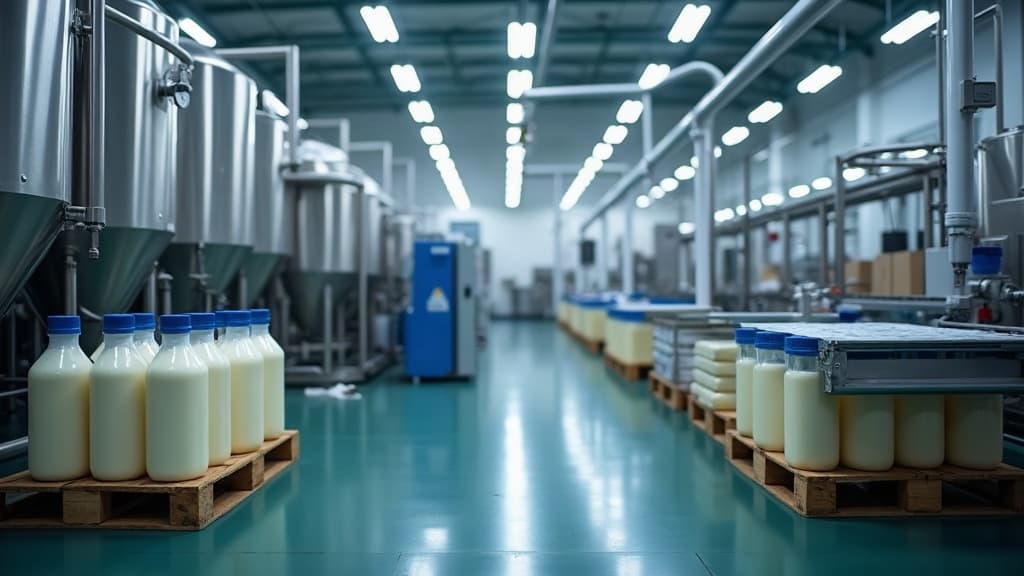
How to perform capacity planning in a dairy processing plant for investors?
Capacity planning is the engineering process necessary to determine and optimize the production potential of a dairy processing facility. This process requires consideration of various factors to meet the current and future needs of the facility. Proper capacity planning allows investors to control costs and respond quickly to market demands.
What is capacity planning?
Capacity planning is the process of determining the maximum production amount that a facility can handle within a specific time frame. This process involves a series of factors including the design of the production line, equipment selection, workforce planning, and raw material procurement. In dairy processing facilities, capacity planning is typically expressed in tons/day or tons/hour, and this value directly impacts the efficiency and profitability of the facility.
Where is it used?
Dairy processing facilities use different lines for the production of various products. These lines include products such as milk, yogurt, cheese, and butter. Different capacities and processing steps are required for each product. For example:
- Milk Processing & Pasteurization Line
- Yogurt Production Line
- Cheese Production Line
- Butter Production Line
Engineering assessment
There are several key engineering factors to consider in the capacity planning process:
- **Energy consumption:** Energy costs constitute a significant portion of total operating costs. Achieving energy efficiency is critical for reducing costs.
- **Cleaning and CIP (Clean-In-Place) systems:** Hygiene is vital for production quality in dairy processing facilities. The effectiveness of CIP systems increases efficiency by reducing downtime.
- **Production flow:** The flow of the production process is an important factor affecting the overall efficiency of the facility. Optimizing the flow reduces unnecessary downtime.
- **Maintenance:** Regular maintenance of equipment prevents breakdowns and ensures production continuity.
- **Level of automation:** Automation is an important tool for increasing production efficiency. High levels of automation reduce labor costs and minimize error margins.
| Criteria | Low Capacity | Medium Capacity | High Capacity |
|---|---|---|---|
| Energy Consumption | High | Medium | Low |
| CIP Efficiency | Low | Medium | High |
| Production Flow | Complex | Medium | Optimized |
| Maintenance Needs | High | Medium | Low |
| Level of Automation | Low | Medium | High |
Choosing the right equipment
Selecting the right equipment during capacity planning is a critical step. Some factors to consider in equipment selection include:
- Production capacity: The equipment must be suitable for the production capacity required by the facility.
- Energy efficiency: The energy consumption of the selected equipment directly affects operating costs.
- Hygiene standards: The hygienic design of the equipment is important for food safety.
- Ease of maintenance: Equipment that is easy to maintain provides an advantage for operational continuity.
Common mistakes
Some common mistakes made during the capacity planning process and their consequences include:
- **Insufficient raw material analysis:** Incorrect calculation of raw material quantities can lead to production interruptions and increased costs.
- **Equipment incompatibility:** Choosing inappropriate equipment reduces efficiency and increases maintenance costs.
- **Inadequate workforce planning:** Insufficient workforce planning can lead to disruptions in production processes.
- **Neglecting CIP systems:** Poor management of cleaning processes can negatively affect product quality.
The ProcessTürk approach
At ProcessTürk, we meticulously carry out capacity planning processes in dairy processing facilities. At the beginning of the project, we conduct a detailed engineering analysis to understand our clients' needs. At this stage, we evaluate the existing infrastructure of the facility, identify the necessary equipment, and design the most suitable production flow. Throughout the project, we also provide support during the installation and commissioning phases of the production line, facilitating our clients' investment processes.
Conclusion
Capacity planning in dairy processing facilities is a critical process for both cost-effectiveness and production efficiency. Proper planning and engineering practices play a significant role in helping investors achieve success.
Frequently Asked Questions
How long does capacity planning take?
The capacity planning process can vary depending on the complexity of the project. Generally, it can be completed within a few weeks, along with a detailed engineering analysis.
Which equipment should I choose?
Equipment selection depends on the production capacity and type of product of the facility. An engineering assessment should be conducted to determine appropriate equipment for the dairy processing line.
How can energy efficiency be increased?
To increase energy efficiency, high-efficiency equipment should be preferred, and production processes should be optimized. Additionally, establishing systems to monitor energy consumption would be beneficial.
Why are CIP systems important?
CIP systems are critical for maintaining hygiene in dairy processing facilities. Effective CIP systems reduce production downtime and improve product quality.
How can maintenance costs be reduced?
Regular maintenance and proper equipment selection are the most effective ways to reduce maintenance costs. Additionally, operating the equipment according to the user manuals is also important.
Next Step
As ProcessTürk, you can request a special engineering assessment for your dairy processing facility. Our expert team will analyze your needs and provide the most suitable solutions.