ProcessTürk — Turnkey Industrial Plant Solutions
Filling & PackagingFully automatic

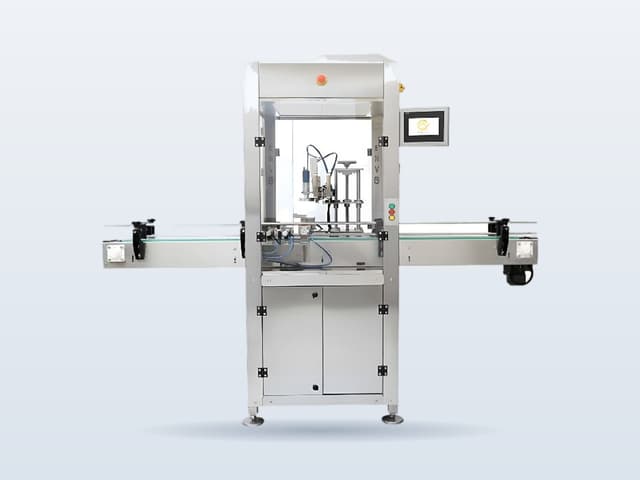
4x1 Servo Linear Filling Machine

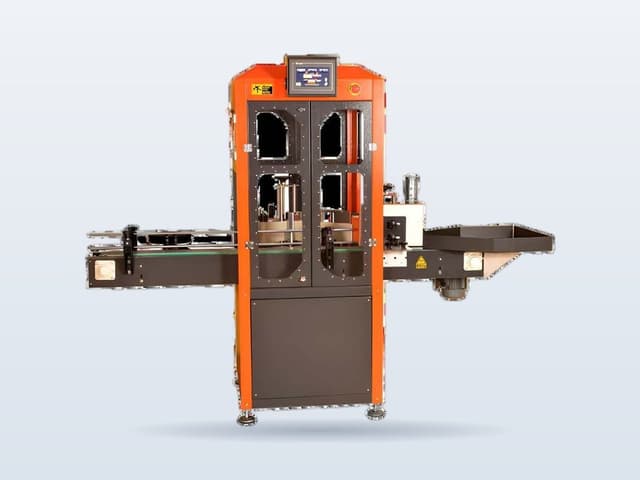
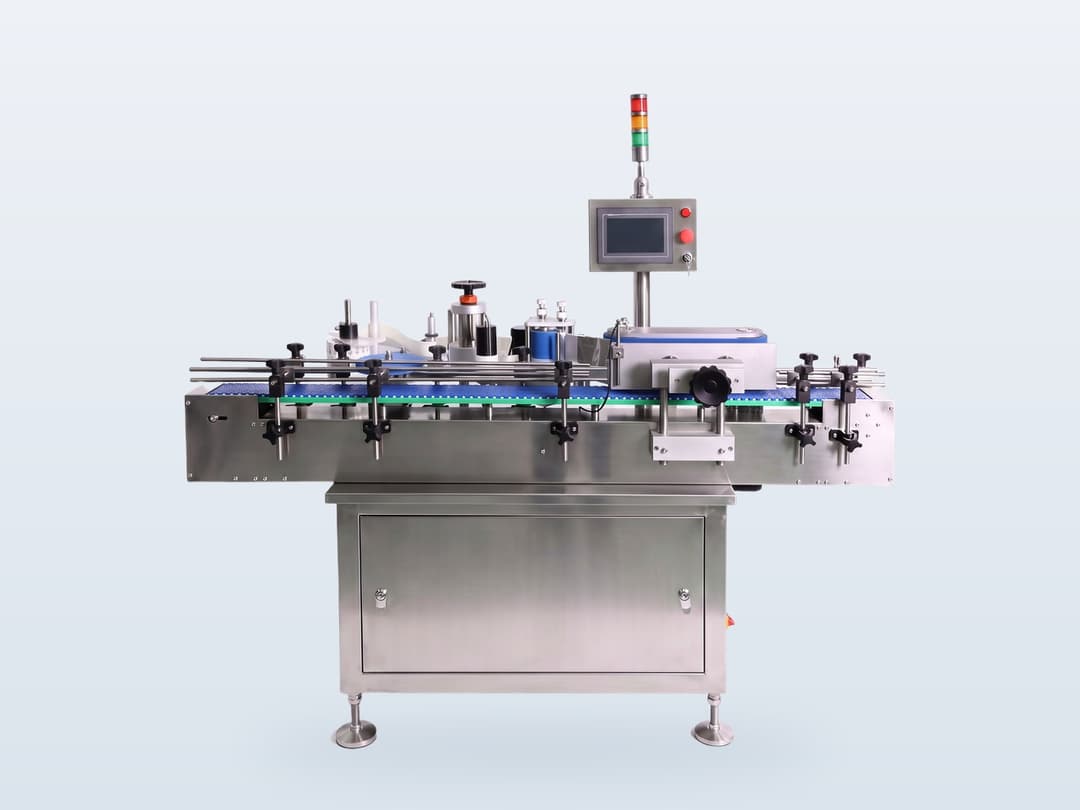
The 4x1 servo linear filling machine is a four-injector filling unit that meters liquid product volumetrically into bottles. During filling, the nozzles start at the bottom of the bottle and rise with the liquid level; this movement prevents the agitation caused by free-fall and markedly reduces foaming in foam-prone products. Servo drive cuts off the nozzle at end of fill to prevent dripping, keeping the bottle neck and cap surface clean. The line runs at 500 – 2,500 units/hour in 1000 ml format. Filling accuracy is approximately ±0.5% depending on product and fill volume, approaching ±1% at low fill volumes. Power requirement is 2.8 kW (220 – 380 V), working pressure 6 bar and air consumption approximately 150 – 250 NL/min. The machine measures 1280 × 800 × 2270 mm and ships with a 6-metre conveyor; the frame and all product-contact surfaces are AISI 304 stainless steel. Injector count directly determines capacity and can be upgraded from 4 to 6 or 8 nozzles. Selecting on target output alone is misleading, however: a viscous sauce and a thin edible oil do not flow through the same nozzle at the same rate, so real capacity depends on product viscosity and bottle neck diameter. Format changeover is mechanical; in plants switching frequently between bottle sizes, this time directly affects shift efficiency. A filling machine is not a line on its own. Product preparation and a feed tank precede it; capping, labelling and date coding follow, and these can be integrated on the same conveyor as options. ProcessTürk delivers the machine standalone or as part of a sauce or liquid food filling line. Nozzle and filling system are adapted to your product viscosity, foaming behaviour, bottle format, cap type and capacity target.

Last updated:

Capacity:500 – 2,500 pcs/hAutomation:Fully automaticMaterial:AISI 304Lead time:6 – 10 weeks
Suitable Products
Liquid oilSauceBeverageDetergentCosmetic liquid
Estimated investment
⁦⁦$34,500⁩ – ⁦$44,000⁩⁩
Exact price confirmed in quote
Chat on WhatsApp
Capacity

Capacity options for this machine

500 – 1,000 bottles/hour
1,000 – 2,000 bottles/hour
2,000 – 2,500 bottles/hour
Special capacity (project-based)

Specifications

Filling systemVolumetric (servo)
Capacity500 – 2,500 pcs/h (1000 ml)
Injectors4 pcs (expandable)
Filling precisionApprox. ±0.5% by product and volume (~±1% at low volumes)
Power2.8 kW · 220 – 380 V
Dimensions1280 × 800 × 2270 mm
Air consumption6 bar working pressure · air consumption approx. 150 – 250 NL/min
Conveyor6 m
BodyAISI 304 stainless

Why buy this machine from ProcessTürk?

  • Servo drip-free nozzle
  • PLC touch control
  • Quick format change
  • AISI 304 food-contact surface
Packaging / Process Options
PET bottleGlass bottleContainer
Optional Features
6 nozzle upgrade8 nozzle upgradeCap closing integrationLabeling integration

Installation & Commissioning

Layout, mechanical/electrical assembly coordination and full-capacity commissioning are handled by our team.

Operator Training

During commissioning your operators are trained on-site for operation, cleaning and daily maintenance.

Spare Parts & Service

A critical spare-parts list is provided with the quote; remote and on-site service support production continuity.

Customization for Your Product

Nozzles and the filling system are adapted to your product viscosity, foaming behaviour, bottle format, cap type and capacity target.

What will we ask you before the quote?

These details let us offer the right scope and the right price the first time.

Product type
Capacity target
Packaging type
Installation country
Existing facility status
Power / water / air utilities
Target budget
Planned investment date

Frequently Asked Questions

Is this machine suitable for my product?

Suitability assessment is carried out free of charge by our ProcessTürk engineering team and is based on your product sample, packaging type and target capacity. First, the product's flow behaviour, viscosity and fill volume are reviewed; then the current configuration is checked against your process requirements. If it does not match, our engineers adapt the machine — for example the product-contact surface, the number of filling heads or the packaging module. Food-contact surfaces are always stainless steel and are selected according to hygiene requirements. In addition, facts such as capacity, automation level and delivery time are confirmed to you in writing once the assessment is complete. Finally, the request moves to the quotation stage, where the final configuration is stated in the proposal document. This assessment is usually completed quickly and no extra fee is charged. Pilot tests for different packaging types can also be scheduled on request, and the results are reported back to you.

Is CE-compliant manufacturing available?

Yes; CE-compliant manufacturing and documentation options are offered based on your target market. The machine is designed and built according to the essential safety requirements of the EU Machinery Directive. On request, the technical file, risk assessment and declaration of conformity are prepared together with delivery. For Gulf and African markets, different certification or voltage/frequency adaptations are also planned by our engineering team. The CE mark confirms that electrical safety, mechanical protection and hygiene requirements have been verified, which simplifies your export process. The documentation package usually includes the user manual, electrical schematics and maintenance instructions. The certification scope varies by project, so telling us which market you plan to export to speeds up preparation of the correct documentation. As a result, CE compliance lets you export with confidence to Europe and to other markets that accept the CE mark.

How do delivery and installation work?

After production is complete, a Factory Acceptance Test (FAT) is carried out; capacity and safety checks are verified together with you or your representative before commissioning. Shipping, on-site installation and commissioning are then coordinated according to the project plan. Lead time depends on the scope of the order and on our production schedule at the time; if you tell us which machine you are interested in, we can share the exact lead time that applies. The clock starts once the order advance is received and the figure is stated as binding in the quotation. During on-site installation, mechanical and electrical assembly is carried out by our team according to the layout plan. During commissioning, your operators are trained on-site for operation, cleaning and daily maintenance. Once installation is complete, a full-capacity test is run and the results are shared with you, so the machine begins production with a measured and verified performance.

What is covered by the warranty?

For single-machine purchases, the warranty period is 1 year; wear parts are outside this scope. For complete line projects, the warranty is defined per piece of equipment and stated in writing in the quotation, since each item may carry a different warranty length. If a fault occurs during the warranty period, remote technical support is provided first; if the issue cannot be resolved remotely, an on-site intervention is planned. We recommend a separate spare-parts package for critical wear items so that unexpected downtime is kept to a minimum. The warranty covers manufacturing defects, assembly errors and electrical/mechanical component faults; damage caused by user error is excluded. The warranty period starts from the delivery date, not from commissioning, and this is clearly stated in the proposal document. This structure gives you a predictable support process for both single-machine purchases and large-scale line investments.

How are spare parts and after-sales support provided?

A critical spare-parts list is provided together with the quote, so you can see before delivery which parts should be kept in stock. During commissioning, your operators are trained on-site for operation, cleaning and daily maintenance, and the training is usually planned to cover your entire production team. Production continuity is supported through remote technical assistance and, where necessary, on-site service; in the first stage, the issue is diagnosed remotely. A dedicated channel is kept for spare-parts supply, and delivery time for critical parts is planned with priority. In addition, a periodic maintenance schedule and checklist are shared together with delivery, so maintenance intervals are not missed. The same support process applies to machines installed in different countries; differences in language or time zone do not change the quality of support. This approach supports uninterrupted production throughout the machine's service life.

Related machines

Compact Filling Line
Filling & Packaging
Fully automatic

Compact Filling Line

Gear-pump compact line combining filling, capping and labeling on a single chassis.

Capacity
Approximately 400 packages/h
Lead time
10 – 14 weeks
Estimated investment
⁦⁦$32,500⁩ – ⁦$41,500⁩⁩
View Details
Essential Oil Filling System
Filling & Packaging
Fully automatic

Essential Oil Filling System

Micro-volume essential oil dosing system.

Estimated investment
Project-based price
View Details
Main Liquid Filling Unit
Filling & Packaging
Fully automatic

Main Liquid Filling Unit

It is a unit designed for fully automatic liquid filling operations.

Estimated investment
Project-based price
View Details

Get an engineering pre-assessment for this machine

Chat on WhatsApp