
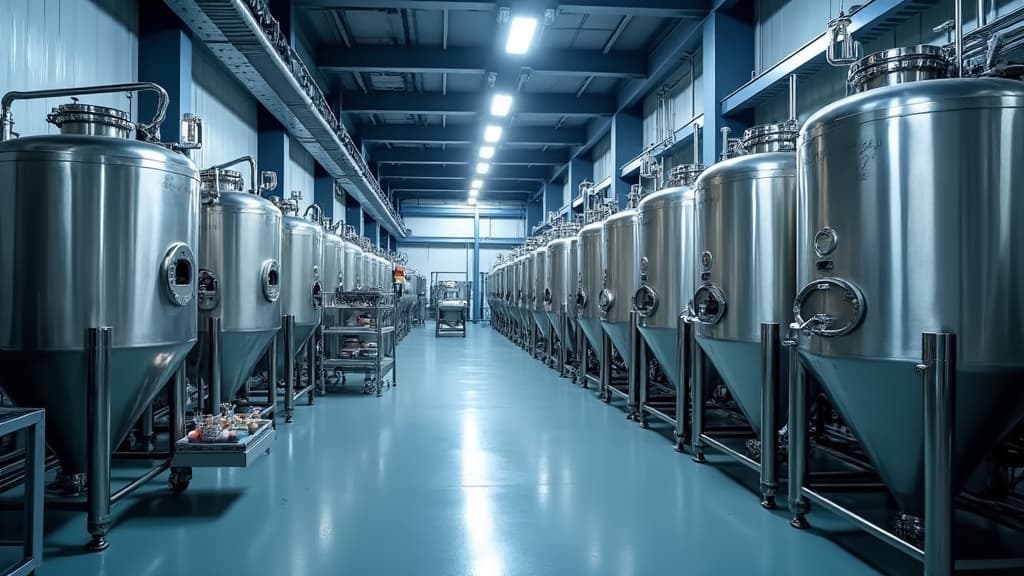
How to Start a Mayonnaise & Sauce Factory: Equipment, Process and Plant Setup
Starting a mayonnaise and sauce factory takes five core steps: preparing the water and oil phases according to the recipe, building a stable emulsion in a vacuum high-shear mixer, homogenizing to the target texture, pasteurizing heat-treated products such as ketchup, and finally filling, capping and labelling. Mayonnaise is a cold-process emulsion; ketchup and cooked sauces are heat-treated — a properly configured single line can produce both families.
Table sauces are among the fastest-moving retail categories across the Gulf, Africa and Central Asia, and a large share of demand is still met by imported brands. A local mayonnaise and sauce plant runs year-round in a relatively compact hall — unlike tomato paste, it is not tied to a harvest season. This guide summarizes the decisions an investor should settle before ordering equipment, and how the plant setup works in practice.
Step-by-Step Plant Setup
1. Define your product range
The first decision is which products you enter the market with: mayonnaise, ketchup, mustard, hot sauce, sweet-and-sour sauces or salad dressings. This decision configures the line, because there are two distinct process families. Mayonnaise is a cold emulsion process: oil is dispersed into the water phase under vacuum with high shear — there is no cooking, and microbial safety comes from acidity (vinegar) and pasteurized egg products. Ketchup and cooked sauces follow a heat-treated process: tomato paste, sugar, vinegar and spices are blended, cooked or pasteurized, and hot-filled. One line can produce both families if the heating-pasteurization module and CIP cleaning between product changeovers are planned from the start. If you intend to produce ketchup, the main raw material is tomato paste — if you are considering producing it yourself, see our tomato paste plant guide.
2. Settle the recipe and emulsion stability
In mayonnaise, product quality is defined by the stability of the emulsion: oil content, egg/starch balance, acidity and mixing parameters work together. A wrong parameter set leads to phase separation (oil split) during shelf life. In ketchup, viscosity, gloss and flow behaviour sit at the centre of consumer perception. ProcessTürk lines are delivered with recipe and process support, and trial batches are tuned to target viscosity and stability values. Even so, planning recipe variants for your market's palate from the start — spiced mayonnaise and hot-sauce variants for the Gulf, for example — gives the sales side a head start.
3. Design hygiene and CIP from day one
Mayonnaise is consumed without cooking, so hygienic design matters as much as the line itself. Closed process tanks, sanitary stainless surfaces, vacuum deaeration and a clean-in-place (CIP) system keep microbial risk under control. If several products share one line, allergen management (egg, mustard) and product-changeover cleaning procedures belong in your food-safety file.
4. Install the processing line
The process flow is: raw-material weighing and preparation → pre-mixing of liquid and powder ingredients → emulsification in a vacuum high-shear mixer → heat treatment/pasteurization for ketchup and cooked sauces → homogenization → filling and capping → labelling and case packing. Vacuum mixing removes entrained air, visibly improving colour, texture and shelf life. Installation covers mechanical assembly, piping and electrical-automation work, carried out on site under the supervision of the ProcessTürk engineering team.
5. Choose your packaging formats
Packaging is a market decision: glass jars and PET bottles are the retail classics; the doypack is the growing format thanks to low packaging cost; and the single-serve sachet is the reality of African retail — in Nigeria and Ghana, consumers buy sauce in single-use sachets. Jar, bottle, doypack and sachet filling can be integrated on a single line; the formats you launch with define the configuration of the filling unit.
6. Obtain licenses, run test production and train the team
Food-production permits are issued by your country's food authority — for example NAFDAC in Nigeria or the relevant ministry in other markets. Hygiene and HACCP documentation is supported by the technical files of the line. The line is first tested with water, then with trial batches. Operator training covers emulsion parameters, viscosity control, CIP cleaning and line safety, so that after commissioning your production team runs the plant independently.
Required Machinery
The main equipment items of a mayonnaise and sauce plant:
- Emulsion & mixer tank — the heart of the line; builds a stable emulsion under vacuum with high shear
- Sauce preparation and cooking platform — jacketed cooking tanks for ketchup and cooked sauces
- Homogenizer — reduces particle size for a smooth, non-separating texture
- Pasteurizer — thermal safety and shelf life for ketchup and cooked sauces
- Servo filling machine — precise viscous filling into jars and bottles
- Automatic labelling machine — retail-standard label application
- CIP cleaning system, capping unit and automation panel
The complete scope, process flow and capacity options are presented on the Sauce, Mayonnaise & Ketchup Line page; for compact hourly-capacity systems see the SAUCE Series Sauce Production Line.
Capacity Tiers
At start-up scale, 500 kg/hour cold-emulsion systems fit into compact halls and carry a regional brand to market; the SAUCE Series covers the 500–1,500 kg/hour band. On a daily axis, 1–3 tonnes/day is the entry scale, 3–5 tonnes/day supports a regional brand, and 5–8 tonnes/day is the industrial class supplying chain retail and export. Higher custom capacities are engineered to project requirements.
In a sauce plant the right capacity is derived from the sales channel: the shelf you target — local retail network, chain supermarkets, HORECA or export — defines the daily output requirement, and the line is sized to match it.
Investment Budget
The investment in a mayonnaise and sauce plant is project-based; it is determined by capacity, product range (cold emulsion, cooked, or both), automation level and packaging formats. Two lines of identical capacity can differ substantially depending on doypack-sachet integration or CIP scope. Once you share your capacity target and product range, ProcessTürk prepares a free engineering pre-assessment within 24 hours, covering the required area, the equipment list and an approximate investment range.
Market Notes: the Gulf, Africa and Central Asia
Gulf and Middle East: in Saudi Arabia, the UAE and Iraq, demand for table sauces is strong in both retail and HORECA channels, and spiced and hot-sauce variants are a natural part of shelf variety. Local production offers price and lead-time advantages over imported brands.
Africa: packaged-food retail is growing in Nigeria and Ghana, and mayonnaise and ketchup are becoming standard basket items; the single-serve sachet format is considered the entry ticket to these markets. In Egypt and Algeria, a growing domestic market presents a clear import-substitution opportunity.
Central Asia: in Kazakhstan and Uzbekistan, mayonnaise is a high-consumption staple of the culinary culture; local production feeds the domestic market and carries export potential across the region.
FAQ
How much does it cost to start a mayonnaise factory?
The investment depends on capacity, product range (cold emulsion, cooked, or both), automation level and packaging formats, so pricing is project-based rather than a list figure. Share your capacity target and ProcessTürk engineers prepare a free pre-assessment within 24 hours, including area requirements, an equipment list and an approximate investment range.
How long does the setup take?
Equipment manufacturing and delivery typically take 8–14 weeks; site installation and commissioning typically take 2–4 weeks on site. The exact schedule is confirmed in the quotation according to capacity and site readiness.
How much space does the plant need?
Space scales with capacity: 500 kg/hour compact systems fit into small closed halls, while multi-format industrial lines are planned together with raw-material storage, a production hall and finished-goods storage. The exact layout is produced as a 3D placement plan during the engineering phase.
Can the same line produce both mayonnaise and ketchup?
Yes. Mayonnaise is a cold emulsion and ketchup is a heat-treated process; when the heating-pasteurization module and CIP cleaning between changeovers are planned from the start, a single line produces both families. This flexibility lets you offer a wider shelf range with one investment.
Do you provide recipe and training support?
Yes. Lines are delivered together with mayonnaise, ketchup and sauce recipes, and trial batches are tuned to target viscosity and stability values. Operator training covers emulsion parameters, viscosity control, CIP cleaning and line safety.
What does after-sales support include?
The turnkey scope includes spare-parts supply, remote technical support and after-sales technical coordination, so that after commissioning your production team can run the plant independently.
If you are planning a mayonnaise and sauce investment, share your capacity target and product range: request an engineering pre-assessment on the custom project page or reach the team directly via the contact page.